Perspective Kumon Perspective Kumon

Crossing Three Worlds — Medicine, Public Health, and Art

“Why do you do all three?”

People sometimes ask me this question. A physician, a public health researcher, and an artist. To many people, these may look like three separate lives. I have lived with this question for a long time. I still do not have a clear answer. But I do have a few honest answers.

I came to art through a side road. I was already working as a doctor when I stood in front of a painting in New York. At that moment, I felt that I was standing in a way I had never stood before. I did not understand the painting. It was closer to a feeling of recognition, as if I had seen something familiar.

I started taking art classes, and later I studied painting and drawing seriously in Chicago. What attracted me was the possibility that I might be able to create something visually meaningful. I was interested in the weight, strangeness, and beauty that only physical objects can have. I wanted to make something surprising, something a little crazy. At that time, I thought that was enough of a reason.

But little by little, it stopped being enough.

When I was away from the studio, living as a doctor and as an ordinary person, I sometimes had a thought. Had I spent years paying attention to things that did not really matter?

It was not a dramatic doubt. It was a quiet and persistent question. Larger questions were being asked around me, but perhaps I had been looking at something else.

To be clear, I am not rejecting the work I have made. The desire to draw, to work with my hands, and to make physical things has not disappeared. It probably never will. But something has changed.

While studying public health and social epidemiology, I learned about the idea of social prescribing. Health is not shaped only by biology or individual behavior. It is also shaped by human connection, social participation, and a sense of meaning in life.

At the same time, I began to think more deeply about socioeconomic status and the social determinants of health. These are the structures that quietly shape who becomes ill, who recovers, and who is left behind.

I had known the term socioeconomic status for a long time. But at that time, I was spending most of my energy making art. Now I spend more time thinking about what this term really means.

I see it in the faces of the patients I have met and in the communities where I have worked. I also see it in patterns that clinical medicine can observe, but cannot fully address on its own.

As I thought about these questions, I also began to see some overlap between social prescribing and Socially Engaged Art. Of course, they are not the same. Social prescribing developed in the context of healthcare and social support, while Socially Engaged Art developed as an artistic practice.

Still, both try to understand people not as isolated individuals, but as people living in relation to others, to communities, and to culture. Meeting other people, taking part in something, spending time together, talking, creating, and finding meaning—these experiences may shape both daily life and health.

This question seems to belong to medicine, public health, and art at the same time.

What draws me now is the place where these three worlds meet.

It is not a place where the answer has already been found. It is still an open question. What happens when the desire to create something truly meets the question of who it is for and why it matters?

I still do not have the answer.

I would like this journal to be a place where I can slowly think about this question, while moving across the boundaries of medicine, public health, and art.

「なぜ三つ全部やるんですか?」

そう聞かれることがある。医師、公衆衛生研究者、アーティスト。多くの人には、これらは別々の人生のように映るらしい。私はこの問いと、ずいぶん長く付き合ってきた。すっきりした答えは、今もまだない。ただ、いくつかの正直な答えはある。

アートとの出会いは、横道からだった。すでに医師として働いていたころ、ニューヨークで絵画の前に立った。そのとき私は、それまで何かの前に立ったことのないような立ち方をしていた。理解したわけではない。もっと「見覚えがある」という感覚に近かった。

教室に通い始め、やがてシカゴで絵画とドローイングを本格的に学ぶことになった。私が引き寄せられたのは、視覚的に意味のある何かを作れるかもしれないという可能性だった。物理的な形を持つものだけが持ち得る、重さや奇妙さや美しさ。驚くようなもの、少しクレイジーなものを作りたかった。当時は、それだけで十分な理由だと思っていた。

そして少しずつ、それだけでは十分ではなくなっていった。

スタジオを離れ、医師として、生活者として過ごしているとき、ふと思うことがあった。私は何年もかけて、どうでもよいことに注意を払い続けてきたのではないか、と。

それは劇的な疑念ではなかった。もっと静かで、しつこい問いかけだった。より大きな問いが周囲で問われ続けているのに、自分は別のものを見ていたのではないか。

誤解のないように言えば、自分が作ってきたものを否定しているのではない。描くこと、手を動かすこと、形あるものを作ること。その欲求は今も消えていない。おそらく、これからも消えないだろう。ただ、何かが変わった。

公衆衛生、そして社会疫学を学ぶなかで、社会的処方という考え方に出会った。健康は、生物学や個人の行動だけで決まるのではない。人とのつながり、社会への参加、自分の生活に意味を感じられることによっても形づくられる。

同時に、社会経済的地位や健康の社会的決定要因について、より深く考えるようになった。誰が病気になり、誰が回復し、誰が置き去りにされるのか。その違いを、目立たないところで静かに形づくっている構造のことを。

社会経済的地位という言葉は、ずっと以前から知っていた。ただ当時の私は、ものを作ることに時間を注いでいた。今は、その言葉が実際に何を意味するのかを考える時間が増えた。

それは、これまで診てきた患者の顔や、働いてきた地域の風景のなかに現れている。そして、臨床医学には観察することができても、それだけでは対処することのできないパターンのなかにもある。

そのなかで、社会的処方とSocially Engaged Artのあいだにも、ある重なりがあることに気づいた。もちろん、両者は同じものではない。社会的処方は医療や福祉の文脈から生まれ、Socially Engaged Artは芸術実践として発展してきた。

しかし、どちらも人を孤立した個人としてではなく、他者や地域、文化との関係のなかで捉えようとする。人が出会うこと、何かに参加すること、ともに時間を過ごし、話し、作り、意味を見いだすこと。そうした経験が、人の生活や健康にどのような変化をもたらすのか。その問いは、医療、公衆衛生、そしてアートのいずれにも関わっているように思う。

今、私が引き寄せられているのは、これら三つの世界が交わる場所だ。

それは、すでに答えが出た場所ではない。今も進行している問いのなかにある。何かを作りたいという衝動と、それが誰のためにあり、なぜ意味を持つのかという問い。その二つが本当に出会うとき、何が起きるのだろう。

まだ答えはない。

このジャーナルを、その問いに向かって、ゆっくりと考えていく場所にしたいと思っている。医療、公衆衛生、そしてアート。複数の境界を行き来しながら。

Read More
Perspective Kumon Perspective Kumon

Presence as a Social Determinant of Health?

Public health research has shown that social isolation, loneliness, social support, and social capital are closely related to health. Yet I wonder whether there is another dimension that has received less attention: presence.

By presence, I do not mean simply being in the same physical space. I mean the experience of having someone there, of feeling seen and acknowledged, and of sensing that one is not completely alone. Even without words, touch, or practical help, the simple fact that someone is present may matter.

Some artists have explored this power of presence. In Marina Abramović’s The Artist Is Present, the artist and each participant simply sat facing one another. There was no conversation, no physical contact, and no practical support. Yet many participants appeared deeply moved. The work suggested that simply facing another person and being fully present can have a powerful emotional effect.

Christian Boltanski’s installations offer another form of presence. Through memory, absence, and traces of anonymous lives, his works make us feel the presence of people who are no longer physically there. Rirkrit Tiravanija’s relational works point to a different dimension. People gather, eat, and spend time together. In these works, sharing time and space becomes central.

These artistic practices suggest that presence is not a single phenomenon. It may appear as being seen, being remembered, being accompanied, sharing a room, sharing a meal, or simply spending time with others.

I have noticed something similar in home-based medical care. For some older adults living alone, the most meaningful part of a visit is not necessarily a prescription, a test, or medical advice. It is the fact that someone came, sat with them, and acknowledged their existence. That simple act can become a form of support.

This perspective raises an important question for social prescribing. We often assume that social prescribing works by increasing participation, activity, and access to community resources. But perhaps one of its more basic therapeutic mechanisms is creating moments in which people feel seen, accompanied, and present with others.

Presence may overlap with social support, belonging, recognition, and relational welfare. At the same time, it may deserve attention as a distinct dimension of social connection. Public health has developed many concepts to describe how social relationships influence health. The language of presence may help us notice something more immediate and embodied: the health significance of simply being there with another person.

Can presence itself influence health outcomes? This is a question I want to keep exploring.

健康の社会的決定要因としての「プレゼンス」

公衆衛生の研究では、社会的孤立、孤独、ソーシャルサポート、ソーシャルキャピタルが健康と深く関係していることが示されてきた。しかし私は、もう一つ見落とされがちな次元があるのではないかと感じている。それは「プレゼンス」である。

ここでいうプレゼンスとは、単に同じ空間にいることだけではない。誰かがそこにいてくれること。自分の存在が見られ、認められていると感じられること。言葉や具体的な支援がなくても、「私は一人ではない」と感じられるような関係性のことである。

一部のアーティストたちは、このようなプレゼンスの力を探究してきた。マリーナ・アブラモヴィッチの《The Artist Is Present》では、アーティストと参加者が向かい合って座るだけで、会話も身体的接触もなかった。それでも、多くの参加者は深く心を動かされたように見えた。そこには、何かを「してあげる」ことではなく、ただ向き合い、そこにいることの力があった。

クリスチャン・ボルタンスキーの作品は、記憶、不在、名もなき人々の痕跡を通して、すでにそこにはいない人々の存在を感じさせる。リクリット・ティラヴァーニャの作品では、人々が集まり、食事をし、同じ時間を過ごす。そこでは、特別な出来事よりも、共に場を共有することそのものが作品になる。

これらの芸術実践は、プレゼンスが一つの形だけではないことを示している。プレゼンスは、見られること、記憶されること、寄り添われること、同じ部屋にいること、同じ食事や同じ時間を分かち合うこととして現れるのかもしれない。

私は在宅医療の現場でも、これに似たことを感じてきた。一人暮らしの高齢者にとって、訪問のなかで最も意味を持つものは、必ずしも処方や検査、医学的助言ではないことがある。誰かが来て、そばに座り、自分の存在を認めてくれる。そのこと自体が、大きな支えになることがある。

この視点は、社会的処方についても重要な問いを投げかける。私たちはしばしば、社会的処方は人々の参加や活動を増やし、地域資源につなげることで効果を持つと考える。しかし、その背景にはもっと基本的なメカニズムがあるのかもしれない。つまり、人が「見られている」「伴われている」「誰かと共にいる」と感じられる瞬間をつくることである。

もちろん、プレゼンスはソーシャルサポート、所属感、承認、リレーショナル・ウェルフェアと重なり合う。しかし同時に、社会的つながりを考えるうえで、独自に注目する価値のある概念かもしれない。公衆衛生は、社会関係が健康に与える影響を説明するための多くの概念を発展させてきた。そこに「プレゼンス」という言葉を加えることで、私たちは、ただ誰かと共にいることの健康上の意味に目を向けることができる。

プレゼンスそのものは、健康アウトカムに影響を与えうるのだろうか。これは私がこれからも探究していきたい問いである。

Read More
Perspective Kumon Perspective Kumon

Before Entering Someone’s Home

In my private life, I do not often visit other people’s homes.
Yet in my work, I frequently enter the homes of patients under my care.

Most of them are older adults.
Some live with family members, while others live alone, surrounded by a quiet form of solitude.
Some homes are carefully cleaned and arranged. Others are filled with the accumulation of daily life, sometimes almost to the point of becoming hoarded spaces.

Each time, I pause for a moment before entering.

I wonder whether they are doing well today.
Whether they have fallen.
Whether they have been eating.
Whether they are sitting in the same place as last time.

In many cases, their lives continue much as before.
I ask about changes since the previous visit, listen to their symptoms, check the medications they need, and complete the examination.
As work, the process often proceeds calmly and routinely.

And yet, at times, being inside another person’s home gives me a strangely surreal feeling.

In a hospital consultation room, the patient enters the space of medicine.
In home care, however, the physician enters the space of the patient’s life.

There is furniture, smell, photographs, bedding, a kitchen, a chair that has been used for many years.
Before anything is said, the space itself seems to reveal something about how that person has lived.

A home is not merely an address.
It contains history, background, silence, and the weight of a life.

I enter the home as a physician.
But sometimes, before being a physician, I feel like one human being briefly standing inside the interior of another person’s life.

The visit ends.
Medications are prescribed.
The medical record is written.

Still, even after I leave the house, something remains with me for a while: the dimness of a room, the presence of objects piled up over time, the image of a person sitting by the window.

Perhaps home care is not only about seeing illness.
Perhaps it is also about entering a place where someone has lived, pausing before the weight of that life, and noticing something that can only be seen there.

Read More
Perspective Kumon Perspective Kumon

Thoughts within a limited time

This year, I have not been able to find enough time to make art. Because of this, it may be difficult to prepare enough works for the solo exhibition I had hoped to hold by the end of the year.

In my twenties and thirties, I think I was able to use much of my time for myself. I could live in a way that gave priority to what I wanted to do. But now, in my forties, I have a family, and I am also continuing graduate studies while working. Through this, I have come to realize how difficult it is to continue making art while doing research and supporting family life.

There are also changes in physical strength that come with age. Still, I do not want to use this simply as an excuse. Everyone has the same 24 hours in a day. For that reason, I need to think carefully about what to prioritize and what to let go of.

At the same time, health is the foundation of everything. Art-making, research, work, and family life all depend on physical and mental well-being. Perhaps this is not a time to force myself to achieve something, but rather a time to look again at the rhythm of my life and find a sustainable way to continue.

Even if I seem to be away from art-making, this time is not necessarily empty. The hesitation and fatigue I feel in everyday life, the time I spend with my family, and the realities I encounter through research and clinical practice are all quietly accumulating within me.

For now, instead of focusing too much on large works or a solo exhibition, I may need to return to my starting point and continue drawing in everyday life. Even if I only have a short time, I can still move my hand, observe what is around me, and record what I see and feel. These small accumulations may eventually lead to future works and exhibitions.

Continuing to make art does not always mean producing large outcomes. Perhaps it means keeping a small space for making within daily life, without forcing myself too much. For now, preserving that space may be what matters most.

今年はなかなか制作の時間を確保できず、目標にしていた年内の個展開催に向けて、十分な作品数をそろえることは難しいかもしれない。

20代から30代にかけて、私は比較的、自分のために多くの時間を使い、自分のやりたいことを優先して生きてきたように思う。しかし40代になり、家庭を持ち、社会人の大学院生として学び続けるなかで、家庭を支えながら、研究のかたわら制作を続けることの難しさを身にしみて感じている。

年齢に伴う体力の変化もある。けれど、それを単なる言い訳にはしたくない。1日の時間は、誰にとっても同じように与えられている。だからこそ、何を優先し、何を手放すのかを考えなければならない。

ただ、何をするにも健康あってのことだ。制作も、研究も、仕事も、家庭生活も、すべては心身の土台の上に成り立っている。今は、無理に何かを成し遂げようとするよりも、自分の生活のリズムを見つめ直し、続けられる形を探す時期なのかもしれない。

制作から離れているように見える時間も、必ずしも空白ではない。日々の生活のなかで感じる迷いや疲れ、家族との時間、研究や臨床で出会う現実もまた、少しずつ自分の中に蓄積されている。

今は大きな作品や個展という形にこだわるよりも、原点に立ち返り、日常生活の中でドローイングを続けていくことから始めてもよいのかもしれない。短い時間でも、手を動かし、見たものや感じたことを記録する。その小さな積み重ねが、やがて次の作品や展示につながっていくのだと思う。
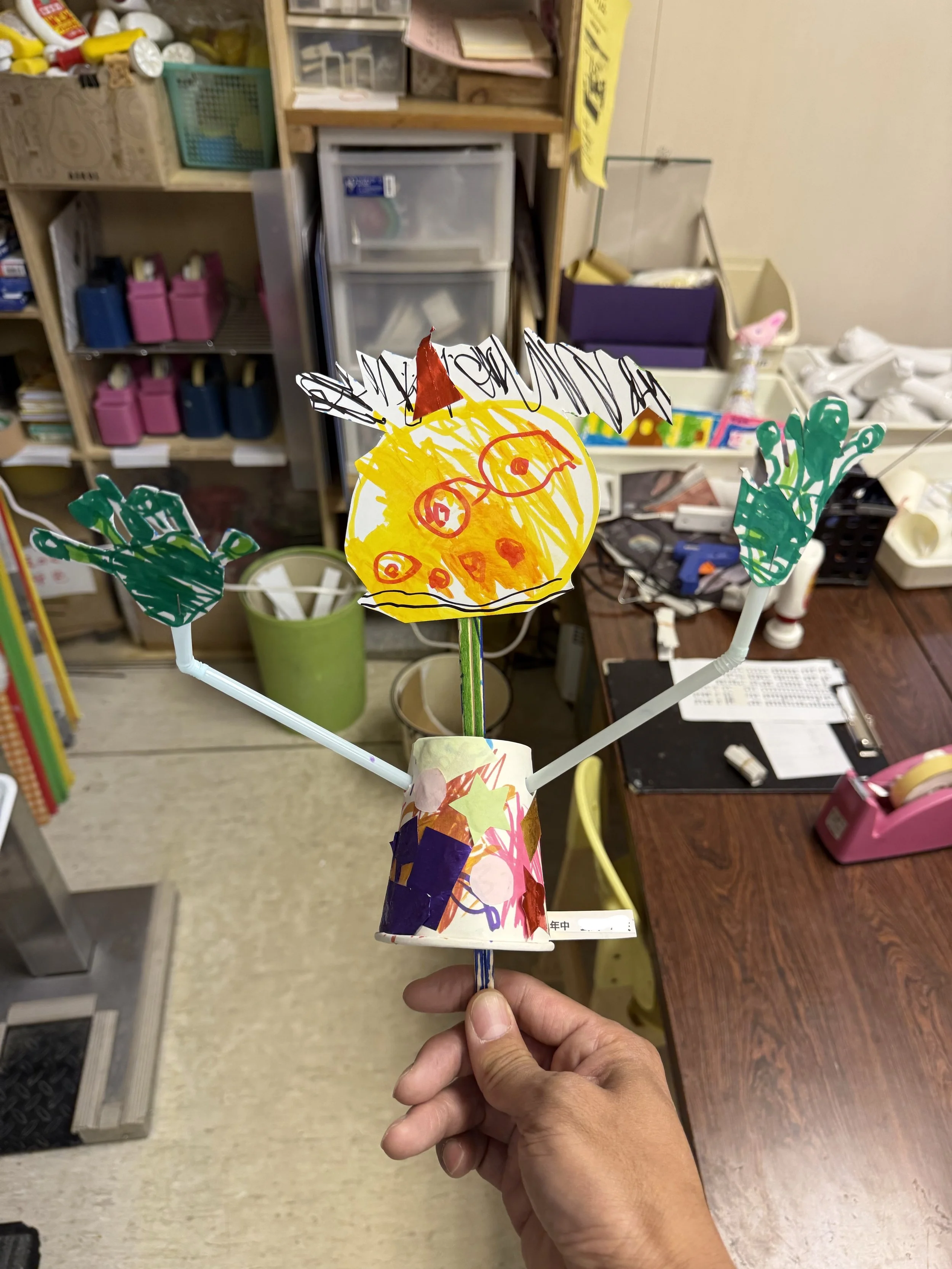
My son’s art

Read More